A form that rejects .jpeg
Application forms, school assignment systems and online-shop dashboards sometimes accept only the .jpg ending and turn a .jpeg away, although the picture inside is identical.
JPEG to JPG is a name change, not a format change: .jpeg and .jpg are two endings for the same kind of file. Drop a .jpeg here and, with the Mode left on Fast, you get the very same bytes back as a .jpg, so the ending is no longer what an upload box objects to. JPG is already chosen as the output, and everything runs on your own device.
Fast mode skips re-encoding entirely. The result line says “Already JPG — kept as is”, meaning the picture is already JPEG data, and the download is the original file under a .jpg name.
PHOTO.JPEG, photo.jpeg or Photo.Jpeg: the ending is recognised regardless of case, and each one comes out with a lower-case .jpg.
Compact re-saves at quality 58. When that copy would not come out smaller, you get the original file back instead, camera and location details included.
Without an account you convert one file at a time. Sign in free to add up to 20 files at once and save the results together in a ZIP.
Application forms, school assignment systems and online-shop dashboards sometimes accept only the .jpg ending and turn a .jpeg away, although the picture inside is identical.
When a scanner, camera or editing program has saved your pictures as .jpeg, give them the .jpg ending the rest of your files use.
Pictures collected from several people often mix .jpeg and .jpg; turn the .jpeg ones into .jpg so the folder sorts and filters as one set.
Tap to pick them, or drag them onto the box. One file converts by itself; after a free sign-in you can add up to 20 at once and press “Convert all”.
Fast leaves the picture alone. Compact makes a smaller, re-encoded copy instead.
Download each file on its own, or, with a free account, all of them in one ZIP.
The Library of Congress format description for JFIF (“JFIF, JPEG File Interchange Format, Version 1.02”, fdd000018, page last updated 8 May 2024, checked 11 November 2026) lists jpg, jpeg and jpe, among other endings, as filename extensions for this format, and adds: “The extension jpg is most frequently used.” That also answers which one to use: .jpg is the usual choice, and .jpeg only matters where a site asks for it by name. Nothing inside the file depends on which ending it carries, so a site that accepts only .jpg no longer turns the picture away because of its ending, and the image itself is left exactly as it was. Upload forms may still check other things, such as file size or pixel dimensions.
We tested a 443.6 KB photo carrying camera and GPS location data. With Fast, the .jpg was byte-for-byte the original, location included. With Compact (quality 58) it shrank to 176.8 KB, 60% smaller, and the camera and location details were gone. In a second test, a 31.3 KB .jpeg already saved at low quality would have grown when re-saved, so Compact handed back the original file, GPS still inside, and the result line read “Already JPG — kept as is”. To post a photo without its location, choose Compact and look at that line: a size drop means the details are gone, “kept as is” means they are still there.
A capitalised .JPEG is handled like a lower-case one: our test file UPPER.JPEG came back as UPPER.jpg with nothing else changed. The starting mode is picked for each file from its own ending when it is added. A .jpeg starts on Fast, because renaming is all it needs. A file whose name already ends in .jpg has nothing to rename, so it starts on Compact and is re-saved smaller, losing its camera and location details if the smaller copy is kept. “Already JPG” describes the picture data, not the name, so it shows up whenever the original is handed back. Mixing both kinds in one batch? The Mode in the settings panel (Fast unless you change it) applies to the whole batch: before “Convert all” runs, every file whose own mode differs from it is listed, ticked to switch, and you can untick any file to keep its own mode; to rename only, leave the .jpg files out.
Add your .jpeg files above. The output is already set to JPG and Fast mode, so each file is simply handed back with a .jpg ending.
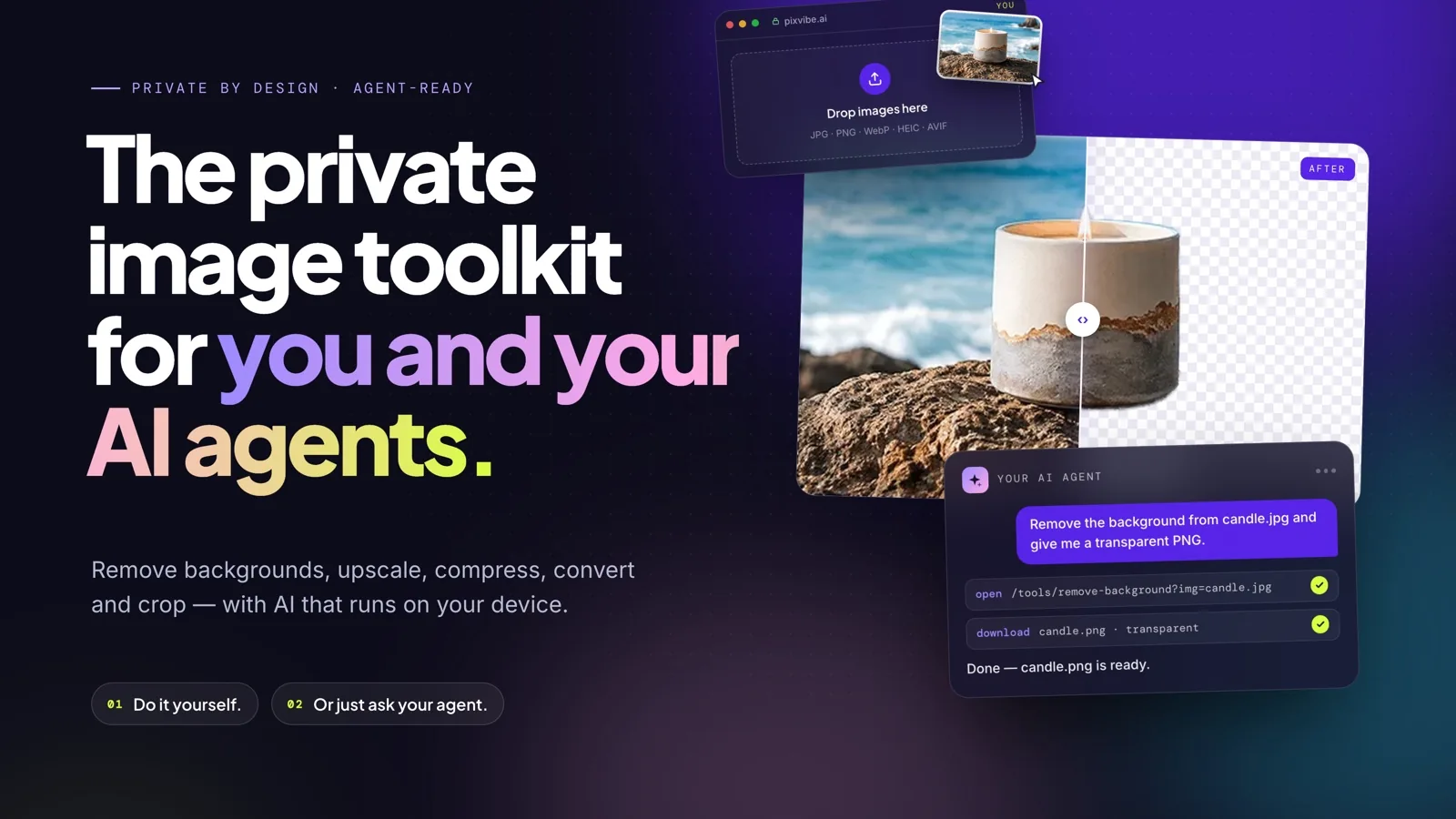
Let an AI agent edit images with PixVibe: one link per job, no API key. We tested Claude, Codex and ChatGPT agent, and show what to check.
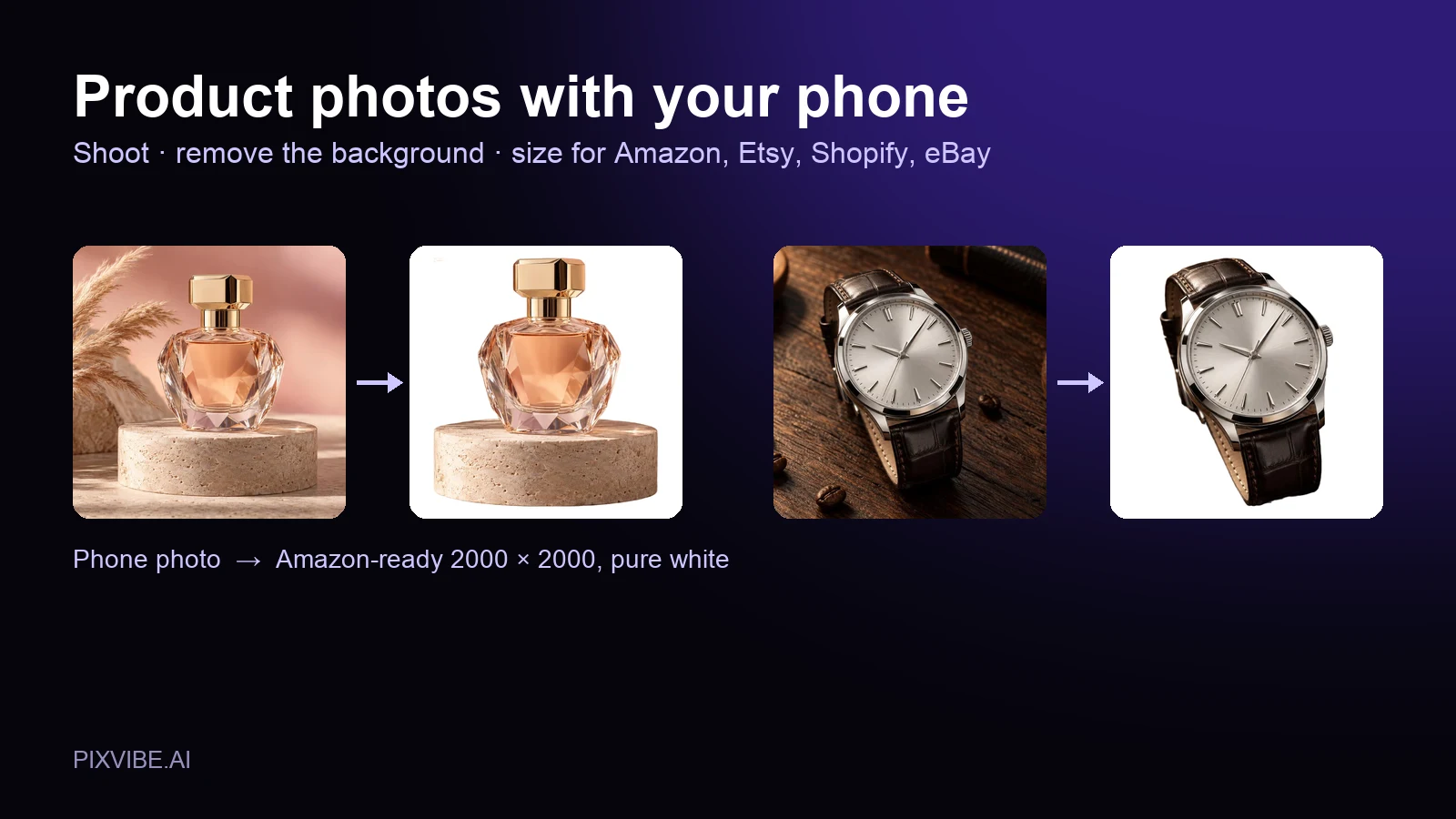
Shoot product photos on a phone, remove the background, and size them for Amazon, Etsy, Shopify and eBay. Official rules in one table.
Free · In-browser processing
 Remove BackgroundMake any image transparent — free PNG.
 Image ConverterHEIC to JPG, WebP to PNG, JPG to WebP & more.
 PDF to ImageTurn PDF pages into JPG, PNG or WebP images — pick pages and DPI.
 Image to PDFCombine JPG, PNG or HEIC photos into one PDF — A4, Letter or fit.
 Compress PDFShrink scanned and image-heavy PDFs, keep selectable text, or hit a target size in KB.
 Passport PhotoFrame your face to passport, visa or ID sizes, change the background and print several on one sheet.
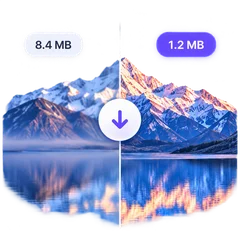 Compress ImageReduce image size, keep the quality.
 Resize ImageResize for YouTube thumbnails & any size.
 Crop ImageCrop and reframe with precision.
 AI UpscalerAI upscale image resolution up to 4×.
Free · In-browser processing
Server AI · Uses credits